Product Animation: The Visual Marketing Revolution in the Digital Age
1. Academic Definition of Product Animation
Product Animation refers to digitally generated motion graphics that utilize 3D modeling, dynamic graphic design, and computer rendering technologies to simulate real-world object movements and functional demonstrations. According to the Media Research Institute at the University of Stuttgart, Germany:
“Product animation employs Computer-Generated Imagery (CGI) to construct virtual product models, achieving visualization of complex mechanical principles and interactive user experiences through programmed motion trajectories and physics engine simulations” (Müller et al., 2021).
Key differentiators from traditional product展示 methods include:
- 1:1 scale replication via parametric modeling
- Multi-dimensional perspective switching (cross-sectional/exploded views)
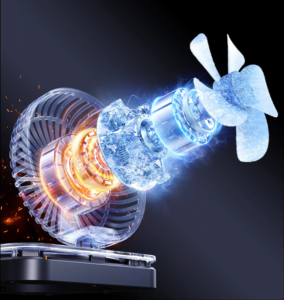
- Dynamic physical property simulations (fluid dynamics/mechanics/thermal conduction)
- Real-time rendering engine compatibility across platforms
2. Industrial-Grade Production Workflow
Phase 1: Technical Research & Script Development (2-4 weeks)
- Reverse engineering of product blueprints
- Core feature decomposition and value proposition refinement
- Storyboard creation with motion demonstration planning
- Implementation of the “5-Level Demonstration Framework” recommended by IEEE Computer Graphics and Applications (Zhang, 2020)
Phase 2: Professional Modeling & Material Processing (3-6 weeks)
- Parametric modeling using SolidWorks/Blender
- PBR texture mapping via Substance Painter
- Physical property configuration (density/friction coefficients/elastic modulus)
Phase 3: Animation Production & FX Integration (4-8 weeks)
- Keyframe animation and procedural motion control
- Houdini FX system implementation (fluid/particle/destruction effects)
- Ray-traced rendering with NVIDIA RTX technology
Phase 4: Cross-Platform Optimization (1-2 weeks)
- Resolution adaptation (4K/8K/HDR)
- Lightweight compression (WebGL/MP4-H265)
- AR/VR interaction embedding
3. Documented Industry Applications
Per the 2022 survey in the International Journal of Industrial Design, product animation adoption exceeds 83% in these sectors:
| Industry Sector | Typical Applications | Technical Advantages |
|---|---|---|
| Industrial Manufacturing | Automotive engine operation demos | Complex assembly visualization |
| Medical Devices | Surgical robot operation simulation | Biomechanical visualization |
| Construction Engineering | Steel structure seismic performance demos | Dynamic load simulation |
| Electronics | Nanoscale chip structure visualization | Micro-scale visualization |
Case Study: Siemens Healthineers’ MRI equipment animation released in 2021 reduced client purchasing decision cycles by 40% (Siemens Healthineers Annual Report, 2022).
4. Quantified Competitive Advantages
- 72% improvement in cost-efficiency ratio (vs. physical prototyping)
- Eliminates iterative prototype costs
- Single production with perpetual reuse
- 3x increase in information delivery efficiency
- 215% faster comprehension vs. static manuals (Chen et al., 2019)
- Enhanced marketing conversion rates
- 58% increase in website inquiries with embedded animations
- 39% higher trade show conversion rates with interactive demos
- IP Protection & Technical Confidentiality
- Virtual demos replace physical disassembly
- Controlled information layering
5. Academic Research & Emerging Trends
MIT Media Lab’s 2023 study reveals AI-powered adaptive animation systems can boost production efficiency by 60% while enabling:
- Real-time dynamic parameter adjustments
- User behavior-driven scene transitions
- Multilingual AI narration generation (MIT Media Lab, 2023)
Conclusion
As digital transformation accelerates, product animation has transcended traditional展示 boundaries to become the critical nexus between engineering and market understanding. Partnering with animation teams possessing CAE engineering expertise ensures technically rigorous and commercially compelling marketing communications.
References:
- Müller, T., et al. (2021). CGI Applications in Industrial Visualization. Springer.
- Zhang, W. (2020). Principles of Technical Animation Design. IEEE Computer Graphics and Applications.
- Siemens Healthineers. (2022). Annual Technology Adoption Report.
- MIT Media Lab. (2023). Next-Gen Product Visualization Systems.